amazon.com/authors/laurengilley

You can check out my books on Amazon.com, and at Barnes & Noble too.
Showing posts with label White Wolf. Show all posts

Thursday, July 9, 2026

#ThrowbackThursday: A Prince


Book One of the Sons of Rome series

The man wasn't supposed to be here. Sasha didn't know who he was, or where he was actually supposed to be, only that that place wasn't here. 

Between one blink and the next he appeared in front of Sasha, haloed by the early morning sunlight, sunk up to his calves in the snow, though there were no tracks coming or going in either direction to indicate that he'd walked here. He simply was. Standing there, shaking his head, dazed and bewildered-looking. 

Sasha stumbled to a halt, tipped his head back, strangely without fear, and stared at him. 

He wore his blond hair long, down well past his shoulders, gleaming gold and faintly rippled at the ends. His hair alone - clean and regal and uncovered by a hat of any kind - would be enough to indicate he didn't belong, but his clothes furthered the impression. They were the kind of clothes that Sasha had only seen in the illustrated books his mother read to him - clothes like a prince in a fairy story would wear. Cream breeches and knee-high boots, and a long, red coat with golden embroidery and buttons.

Nobody in Siberia ever dressed like that.

The man looked around, at the trees, the snow, the sunlight sparkling off it, and finally, when he'd run out of other things to see, looked at Sasha. He asked a question in a language Sasha didn't understand. 

"I'm sorry," Sasha said. A small voice in the back of his mind wondered why he wasn't frightened, but he couldn't bring himself to be. Nothing about the man seemed threatening. "I don't know what you're saying."

The man's golden brows lifted. "You speak Russian?" he asked in flawless, though accented Russian. "Where are we? St. Petersburg?"

"No, sir. In Tomsk."

"Ah. Siberia." He looked disappointed. Sighing up toward the sky, he muttered, "What the hell am I doing in Siberia of all places?"

Sasha had no idea what to make of that. "How did you get here?" he asked. And then, because it had to be true, even though there were no more princes in Russia: "Are you a prince?"

The man smiled, and his teeth were very white, and the eye teeth, especially, were very sharp. "I am, yes." He crouched down so that he was on a level with Sasha; his eyes were sky-colored. "And who might you be?"


Saturday, November 29, 2025

White Wolf Read-Along: Chapter Seven


He always tells the truth...except when it comes to admitting that he's in love. Oh, Nik. 

Sasha's on his way to Moscow in Chapter Seven, and he's understandably frightened. 

This is a short chapter, without much plot movement, but it does two things. One: we catch a glimpse of Philippe using a little magic on Sasha. All that drugged-out calm he feels at the start of the chapter isn't natural; Philippe can't compel with the strength of a vampire, but he's dampening Sasha's panic here. 


Sasha didn't register most of what he said, because the strangest sense of calm had come over him once the train started moving.


Two, and this is the most important, we see the beginning of Nik and Sasha's relationship. 


The captain's face softened. He didn't smile, but the tension in his jaw eased, and his eyes grew warmer - summer storm clouds rather than winter. "You don't need to be frightened of us. My men and me."

Sasha felt his brows go up. 

A corner of the captain's mouth twitched; Sasha thought he almost smiled. "We're just following orders. It's Monsieur Philippe who has ideas."


Nik's comment here about not being "a nice man," is a true one. He's done unspeakable things as a Chekist, but not because he enjoyed them. And while he certainly isn't "nice," with his prickly exterior, his cold facade conceals a very, very tender heart, as we'll come to learn as the series progresses. His grief over losing Dmitri is still raw, and he loathes the idea of subjecting a "volunteer" to Philippe's machinations already. But then he sees Sasha for the first time, and, boom, instant attraction. He's shoving his feelings down ruthlessly, especially after Dima's death, but he falls hard and fast for Sasha in the early days of their mission. He refuses to acknowledge this, even to himself, because he's frightened, and repressed, and this is the Soviet Union in the forties. It's more important that he keep Sasha safe than to indulge in finer feelings. 

Saturday, November 8, 2025

White Wolf Read-Along: Chapter Six


Sasha was nineteen, and foolish enough to think his life would always be his.


In 1942, after the Battle of Moscow, Soviet leadership began conscripting young men and women from Siberia to refill the decimated ranks of the Red Army. The sad truth is, even if Nik and co. hadn't ventured to retrieve Sasha, he would have wound up a soldier regardless. 

It's hard to imagine, even as someone living in the United States, the incredible vastness of Siberia. It's true that they did, and do, think of themselves as "free," compared to their fellow Russians. The tsars largely left them to their own devices, and even the Bolsheviks failed to bring them under the boot heel the way they did with western Russia and the steppe lands. The weather's brutal, summers and winters severe in extremes, with short-lived springs and falls. But they were far removed from the revolutionary politics of Moscow, St. Petersburg, or Stalingrad (now Volgograd), and Sasha's attitude reflects this. He's not known the starvation and subjugation of urban Russians, and that furthers his already-natural sunny disposition. 

In this chapter, Sasha "meets," or is accosted by, rather, Nikita's strike team of Chekists. He obviously has no fine feelings about Nikita, but he notices him.

A few years older than Sasha, dark-haired, snowflakes melting on his jacket, his eyes hard and blue-gray. His face was handsome, but cruel. Shut up like a summer dacha, revealing nothing.

I tend to be what George R.R. Martin calls a "gardener" when it comes to writing long-form book series. I let relationships develop organically, and this oftentimes leads me away from an initial idea, and toward a more natural romantic pairing. As a character grows, so too does my idea of what a happily ever after might look like for them. 

But in this case, I planned for Nik and Sasha to end up together from the very beginning. It was just a sloooooow burn. I wonder how many people suspected that's what I was doing, or if it came as a surprise as the series unfolded. 

Sasha also meets Philippe, and is rightly suspicious of him.

His smile made Sasha think of the hunt, the moment of stillness when the sights were leveled and the trigger finger was ready. The held breath before the shot.

The Chekists were in the business of searching homes, confiscating valuables and daily staples alike, and raping wives and daughters. There's no way Sasha can refuse to go along with them, and he and his parents both know this. So does Philippe, which is why he uses fear to manipulate them.

"I don't think I have to tell you that they are not gentle men."

It's a quick peek into Nik's POV, but we see his extreme guilt complex at work. At this point, he just wants out, no matter what shape that takes.

This line of work would get him killed one day.
And it would be a relief. 

I got such a kick out of writing this first meeting knowing where the characters would end up down the road. Knowing that things get better, and that they find a little slice of happiness amidst the crazy. Also knowing how abrupt, frightening, and seemingly careless this meeting is, and how important they'll be to one another later. 

Saturday, October 4, 2025

White Wolf Read-Along: Chapter Four


His mother would have given her last heel of bread to see the inside of this place. Nikita had given the life of his closest friend - though not willingly.  


Shortly after I published White Wolf, a concerned reader reached out to let me know that Chekists were "the bad guys." I assured her that I knew that, and that, if she read the book, she wouldn't find me sympathizing with Soviet secret police. Chapter Four, "The Captain," is a short one, and so this gives me a chance to highlight some of the real history, and inspiration, that went into the novel. 

I don't want to bore anyone with an annotated history paper, so I'll try to keep things as breezy as possible. Here's what you need to know: post-revolution, Stalin formed a secret police whose main function was to ensure that Russians behaved like good little Soviets. They weren't out there walking beats, apprehending criminals; for the Bolsheviks - for any communist leadership - independent thought, action, and self-determination are the enemies of the collective. The Cheka spent their days pillaging the homes and secret stores of the Russian people. They pulled up floorboards, took squirrelled away grain, vodka, jewels, valuables...and if there were women in the house, they availed themselves of them, too. There were Chekists who enjoyed this - like Commander Beria, who I include in later chapters, and who was killed by his own men, eventually - but there were lots of young men who went along to get along. I can't believe I'm about to quote The Mummy here...but "better to be the right hand of the devil than in his path." Thanks, Benny. 

We don't learn anything about Nikita's political affiliation in this chapter, but we see his leashed anger, and grief, and we know he doesn't want to be doing what he is. If you're thinking, why did I make one of the series' main characters a Chekist? There are a couple reasons. 

I always wanted Alexei to be a central character. It would have made sense to start the Russian leg of the series pre-revolution. But Nik and Sasha needed WWII to happen, so they could exist. And I was inspired by two things. One: the real history of the USSR's search for supernatural artifacts. Everyone knows that Hitler had his boys experimenting with the paranormal. But I don't think it's common knowledge that, under Stalin's orders, the Soviets were quietly but seriously searching for a paranormal answer of their own. Keep in mind that at the beginning of the war, Germany and the USSR were allies. Communism and fascism are nothing but separate branches on the same Marxist tree. After their falling out, the Soviets decided to concoct their own supernatural answer to whatever the Germans cooked up.

Obviously, they didn't create a werewolf. Or did they? We'll never know. But that was a huge inspiration for me. 

The second bit of inspo was, somehow, nerdier. My divorce from the Marvel Cinematic Universe was finalized years ago. But in 2014,15, 16, I was obsessed. I loved the concept of the Winter Soldier so much that I went out and bought comics. 


These two panels actually gave me goosebumps. "We have our winters." 

I always find it irritatingly short-sighted when I see people on social media say that the Soviets were "good" because they fought Hitler. Soviet leadership was evil, but in WWII, the West was going to take whatever help it could get. And one thing history has taught us about Russia is that no one can conquer it over land via traditional, old-school methods. I'm looking at you, Napolean. There are some really cool stories about some badass Russians who took on the Germans, most especially the female sniper units, which inspired Katya's character, but it was Russia itself, the landscape, its winter, that bogged the Germans down in a permanent two-front war. You aren't just fighting men, you're fighting winter. You're fighting the land. 

We meet Nikita here, fresh off another failed mission to find a supernatural artifact. He's dressed as Chekists were back then, meant to intimidate: all black, long leather trench coat, gloves, hat. We'll learn later that he's a White, rather than a Red, and what that means for him personally. But in the meantime, we're with him when he first meets Monsieur Philippe, the first of many real-life historical figures to grace the pages of this book. The major general here is also a real-life dude. 

Timeline wise, this meeting takes place after the Red Army managed to hold off the Germans at Moscow. The Nazis never made it all the way into the capital, but the army took a major manpower hit. At this point, conscripts were brought in from Siberia to fill the ranks, so even if he wasn't turned, Sasha would have wound up a soldier anyway.

There's so many characters in this series, but I see Nik as the central character. Like I said last post, he's the glue that ties it all together, so I'm super excited to be digging into the flashback section of this book. Nik might be my absolute favorite of all my many characters, so it'll be fun to spend some time in his head. 

Also, far warning: I view myself as an entertainer, and I don't comment on politics or current events, because no one is here for that. I want to provide an escape for readers. But I'm not down with the Soviets, or communism in general, so...be prepared for that. 


Saturday, September 27, 2025

White Wolf Read-Along: Chapter Three


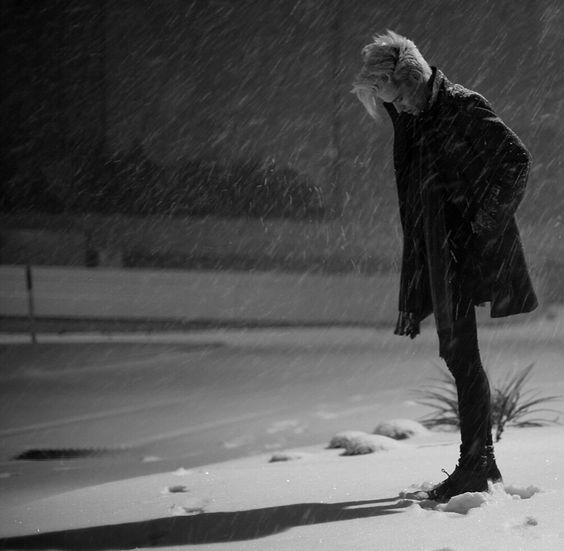
Snow again. The crippling cold. And the blood. Always the blood.

She lay on her back, and the wet cold of the snow bled through her clothes, bit through her skin and found purchase in her bones. Too cold to shiver, too cold to hurt, too cold to scream. Above her the sky wheeled white and endless, sifting fat flakes, clawed by the hard black talons of leafless tree limbs.

She didn't want to die, but she thought she might.

A face appeared above hers, well-made, blue-eyed, pale hair blowing in the ceaseless wind. He didn't snarl at her this time. No, he crouched beside her, the careful touch of his hand achingly warm against her face. His fingers trembled. His breath left his mouth in a shaky rush, pluming like smoke.

"Nikita," he said, and she woke up.


It's always fun to see different authors' takes on vampires, vampirism, and immortality in general, but within the genre, there are certain hallmarks to which most everyone adheres. One of those is the idea that the main reason life is precious is because it isn't permanent; immortality, therefore, comes with its own unique burden. It's a burden that weighs heavily on Nikita, and is the reason (spoiler alert) he hates Alexei at first. Alexei turns others without thought, as flighty about imbuing forever to his victims as the child he was when he was first turned. 

But, I'm getting ahead of myself. 

In Chapter Three, we see more of Trina's problem, in the form of another nightmare, and we learn about Lanny's problem, when he shows up drunk on her doorstep to reveal that he's received a crushing diagnosis. Trina urges him to start treatment, which he doesn't want to do, but he's too addled to have that sort of conversation with - or for the confession he lays at her feet. Like I said in the last post: he's an ass. It's a good moment for the gentle reminder that I often disagree personally with the way one of my characters behaves, but it makes for good on-page drama. 

Obviously, Lanny's health crisis is going to become important later. But the big twist of Chapter Three comes at the end, when Trina doesn't merely have another nightmare, but wakes up inside a stranger's body. This time, the blue-eyed boy of her nightmares isn't snarling and howling in the snow, but kneeling in front of her - of the person whose mind she's inhabiting - and pleading sweetly for someone named Nikita to "show her" something. 

There's a throwaway line in this chapter that, this many years later, I've forgotten I originally included. Not when her family had long since fallen apart and she had no one left but him. In the early days of White Wolf, I had this idea of Trina's family being a little more eccentric and unstable than they prove in Red Rooster. I liked the idea that, knowing the family history, the Big Secret of Nikita, her parents were strongly against her becoming a cop. They didn't want her getting into a dangerous profession; cue young, academy-bound Trina pushing back, big blowups. Her grandparents are a little kooky, and host seances, and her uncle's a little "off." I liked the idea of her needing Lanny more than he needed her. 

It's a case of the overall needs of the story adapting as a series progresses, and of an author having written millions of words and forgetting lines like this one. Oops! 

But I'll choose to see it here as Trina feeling like she can't lean on her family, like she's fallen out of it. Looking ahead, I think that works well enough.

This chapter marks the end of the modern-day storyline for a while. In Chapter Four, we travel to Moscow, and we dig into the historical side of the novel in earnest. In Chapter Four, we meet our captain. 

White Wolf Read-Along: Chapter Two


No one wore grief well, but for some it was a costume. It was Trina's job to figure out who was sincere, and who was playing dress-up.


Chapter Two is all about the police procedural side of the story, with a healthy dose of our detectives trying to figure out what's bothering one another in their personal lives. They're both "fine," of course. 

Y'all know I'm a detail person, and I also really love police procedurals. Mystery/thriller is my most read genre. I love the process, the chase, more than learning whodunnit, so it should come as no surprise that I revel in the little details of fact-finding, interviewing, and interrogation. I'm not a fan of "pulling one over on the audience." A little shock here and there is okay, but I don't ever like to sucker-punch the audience in a way that leaves them reeling. As the clues begin to form a picture for the detectives, so too should they inform the audience. That's my approach, anyway. 


"[K]inda posh, and not in a good, rich guy way. Like, a mama's boy or something, you know?"


Badly as I'd like to, I won't jump ahead and address the identity of this mama's boy, even though I want to. For now, he's simply "the killer," and Trina and Lanny are trying to figure out why their vic has zero lividity, and yet there's not a drop of blood at the crime scene. 

From a character-building standpoint, my goal with this chapter was to establish a rapport and intimacy between Trina and Lanny. Trina's been to his family Thanksgiving, and she's adopted his mother's habit of calling him by his full name, Roland, when he's being an ass - which is often. Lanny is my favorite sort of male character to write: kind of an ass. Confident, comfy in his own skin, irreverent. He stands in bold contrast to the other men in this series, who are either tortured Heathcliffs, like Nik and Fulk, princes of varying levels of aggression, or absolute rays of sunshine, like Sasha, and, to a lesser degree, Rob. Lanny is a dude. If I had to airlift him into another of my series, he'd make a pretty good Lean Dog. 

When the novel begins, though, we quickly realize, through Trina's eyes, that's something's amiss with him. We'll learn what that is in Chapter Three. 

Trina's still struggling with her nightmares in this chapter, and the resultant sleep deprivation. Lanny is the very soul of practicality, but Trina's family (which we'll learn more about later, and actually get to meet in book four) has always led her to believe that the inexplicable and mythical has a basis in reality. The oddness of this case is bugging her much more than it's bugging Lanny. 

I had a Facebook question after the Chapter One post as to whose eyes Trina was psychically seeing Sasha, and the answer is Nikita's. Next chapter, we'll see them have a little Vulcan Mind Meld moment before we take a full and deep dive into the past. 

Up next: Lanny's secret, and a healthy dose of that vague kind of magic I mentioned in Chapter One. Stay tuned! 

Saturday, September 13, 2025

White Wolf Read-Along: Chapter One


It was a night ripe for fictitious interpretation. The rain-slick streets, the colored neon reflected in puddles, the steaming subway grates - all of it straight off the pages of a comic book. 


We've finally reached the first chapter! If you stuck through the prelude, the preface notes, and the prologue, then welcome to the meat and potatoes of book one. Thanks for being here. 

The thing about this series is there isn't a main character. Not really. I feel like Nik and Sasha are the overarching, unifying glue of the series, but page time gets spread across the board. I think some readers dislike that. Sprawling, multi-POV stories were de rigueur in the 80s and 90s, when I was starting my reading journey, so that's always the style I've favored. I think of it this way: no, we don't stay locked in one character's head for the whole journey, so you have to shift your focus, but you also get a much richer reading experience because you're seeing all angles of the story. 

In Chapter One, we meet Trina, who is part of our ensemble, and not the main character, but a very important one. 

We open with a glimpse of Siberia. A dream - or nightmare, rather. Dreams and dream-walking and psychic projection are central to the mythology system of this series. I like my magic systems to be fluid and inexact, and that's what we have here: no incantations and strict rules: different vampires have different strengths and skills within the psychic realm. Nikita, we'll learn, has his sire's incredibly strong ability to compel others, and that gets manipulated in this book by a third party, and none of those involved truly understand the mechanics of how it happens, only that it's *magic.* Give me vague magic all the live long day. 

From her haunting, violent dream, we cut to Trina's reality. Every scene involving Trina and Lanny working as detectives in the city is one of my favorites. Writing about vampires and werewolves automatically makes for a strong fantasy element. But if you asked me, I think one of my strongest skills as a writer is bringing to life the dirty, unpretty, ordinary side of life. Here in this chapter: the NYC noise, the neon in the puddles, Trina's cramped apartment and overstuffed closet. I think if you write with intent, you can make all of those real-life details beautiful through words alone, if not through visuals. I find that sort of dirty detail to be comforting, and I really relish the chance to make a scene feel real, and gritty, and even unpleasant, like with the crime scene here. 

Plotwise, this chapter sets up a murder that's about to lead our NYC characters down an immortal rabbit hole. 

Character wise, we meet three important players. Trina, of course, but also her partner, Lanny, and Trina's no-nonsense medical examiner friend, Dr. Christine Harvey. We don't learn much about Dr. Harvey here, other than that she's quick, competent, and good at her job, based on her attitude alone.

Lanny, we can see, is Going Through It™, and handling it in unhealthy ways. So that sets up the Big Reveal for him in the chapters to come. One of the reasons I love Lanny as a character is that he is so NOT a character who belongs in a fantasy story. He's the sort of rough-around-the-edges, disbelieving guy not at all enchanted by magical forces, and I love the way he grounds the wildness of the immortal story in something more immediate and real for modern readers. My vampires run the gamut: ancient to modern, and that was important for me, to show the contrast. 

I know that Trina has gotten a little flak, over the years, for being "boring." I would argue that all of my mortal characters are boring by comparison to the centuries' old characters, by default, and by necessity. I would also point out that, since character development is my most important aspect of storytelling, all those "boring" people have SUCH a journey ahead of them. 

Saturday, September 6, 2025

White Wolf Read-Along: The Prologue


A preface, a prologue, and quotes at the front? Yes. I'm that annoying person. But like I talked about in the previous post, I feel like if ever a story covered enough territory to earn a little melodrama in its presentation, this is it. I'll be the first to admit that when I open a fantasy novel with little anecdotes, quotes, or a map at the front, I usually skip over them - but only at first. I reference them again and again as I read through the novel, and they gain new flavors of relevance as I go, so that's my intention here. 

These are the things that we know.

I have a personal rule with regard to researching for a historical novel - well, two, actually. One: always triangulate sources (at minimum), so that I'm never relying on one source. Obviously, this is a fictional story, and I do play fast and loose with facts on purpose, but I also like to include as much of the black-and-white truth as I can. Two: always do three times more research than you need. I learn more than I end up sharing, parsing down factoids and tidbits to keep the story on track. 

I prefer to write in a limited POV, fully embedded style so that even objective facts are relayed through the biased perspectives of whichever character is currently walking us through the story. I wanted to drop immediately and completely into a historical perspective when it came time for Nikita to take the reins, so I wanted to give the audience a few background notes to start. 

It's important, here, as our prologue begins, to understand the state of the world as it stood, then.

For our personal purposes, it's important to understand two true statements:

On December 30th 1916, Grigory Yefimovich Rasputin was murdered by a group of nobles led by Felix Yusupov, husband of the tsar's niece. His body was found a few days later in the Neva River. He'd been shot in the head at close range, according to autopsy reports.

In the wee hours of the morning on July 17th 1918, in the Ipatiev House in Ekaterinburg, Russia, ex-Tsar Nicholas II, his wife, ex-Tsarina Alexandra, and their five children were roused from sleep and escorted by guards out of the home, across the courtyard, and into a basement. Nicholas carried his ailing son, Alexei, in his arms. In the basement, Bolsheviks read Nicholas his death sentence, and then murdered the entire family. 

I think I might have always found the tragic tale of the Romanov family fascinating, given its inherit mysticism. But when I was in middle school, I had a social studies teacher who was obsessed with the Romanovs. We strayed far from the syllabus that semester, watching documentaries about Rasputin, about the family, about the revolution as it unfolded. She'd traveled to St. Petersburg multiple times and brought her personal slide shows to share with us. I got bit by the bug, and I've been intrigued by the Russian royals and their terrifying "Mad Monk" ever since. 

I saw one review years ago that expressed "why should I care about the Romanovs?" Well. To put it bluntly, I care, and I'm steering this ship. So...

A preferred question, for me, is "why Alexei?" Partly because plenty has already been done with Anastasia, and I like to sidestep convention when I can. Partly because Alexei was the heir, and I needed another prince in my character lineup. 


But mostly because of Rasputin. Alexei was the one with hemophilia; he was the one with whom Rasputin spent untold hours locked away. If Rasputin is a vampire, who better and likelier to turn than Alexei?

And if EVER a real-life figure could have been a vampire, it's this guy.


This is where we start. These are the things that we know. And then we meet a different prince.

Prologue

"Are you a prince?"

The man smiled, and his teeth were very white, and the eye teeth, especially, were very sharp. "I am, yes." He crouched down so that he was on eye level with Sasha; his eyes were sky-colored. "And who might you be?"

Again with the melodrama, but I'm not going to go into any detail about Val here, because I very intentionally kept him mysterious in the prologue. Of the many characters I've written, he's one of my absolute favorites. We won't learn it until later, but his chance astral meeting with a small Siberian boy here will rewrite the course of his own destiny. He's bored, petty, and damaged enough to knowingly offer a boy to a monster...just as he's tender enough to love that same boy many years later, and align himself with his cause. 

For now, though, he's bored. He'd like to throw a match into a pool of gasoline and see what happens, just to watch the flames dance. 

"Christ," he gasped.

The visitor grinned, flashing his fangs. "Close, but not quite, I'm afraid."

The fun thing about the seance scene is that, prior to Val's appearance, all three characters present are real-life figures. 

Before Rasputin journeyed to the capital, Tsarina Alexandra sought the mystic healing powers of a Frenchman known to history as Monsieur Phillippe. Those close to the family found his presence concerning, and he was eventually driven away. There's been much speculation as to his true identity, and even some DNA testing, but no one can say definitively who he was. 

It was afterward that sisters Milena and Anastasia (Militsa and Stana), who'd married Russian royalty, introduced the family to Rasputin. 


Saturday, August 23, 2025

White Wolf Read-Along: The Stalker


Our Fearless chapter-by-chapter read-along has been not only a lot of fun for me as an author, getting to revisit a 10 year old story with fresh eyes, and read the whole thing word for word for the first time since publishing it, but it's been a cool chance to share some never-before-talked-about behind the scenes motivations and anecdotes. I asked on Facebook and Instagram yesterday which book you'd like me to do a read-along with next, and consensus was split between Price of Angels, and White Wolf. I decided I'd save Price of Angels for after Fearless, so we can work our way through Dartmoor in order. In the meantime, I'm going to block off Saturdays for a White Wolf read-along. It'll be a great chance for me to get back into the paranormal groove as I start back working on the series, and also to do a deep dive in a way I never have before.

All four released-so-far books in the series are just 99c apiece, so if you haven't checked out the series yet, I hope you'll grab a copy of White Wolf and join us. If you've already read the series, I hope I can provide some new insight and inspiration, and highlight just how crazy real history is! 

Ready? We're going to start with the prelude, The Stalker. If you're a new reader, don't purchase the ebook version of The Stalker by itself; it's in the front of White Wolf. I released the prelude by itself in July of 2017, and White Wolf in October. I left the original release of The Stalker up because I selfishly didn't want to delete those reviews. Oops! Oh well. The whole series is an absolute steal, so it all works out.

Okay, that's the last of the housekeeping. Ready for real? Let's dive in.

Anyone who's been here since 2017 will know that the Sons of Rome series is my pet project. I first started playing around with it when I was still in high school. Val and Mia were the first characters. The spark, if you will. Back then, if you'd told me that one day most of my books would be about outlaw bikers, I would have said, "About what now?" Because I was bewitched by the story of an apparitional prince visiting a sick girl. 

Over the years, the overall shape and tone of the series changed quite a bit. I added new characters, new creatures, new backstories and historical references. It continued to expand...and expand, and expand. In college, I realized I was setting myself up to write an epic series. Not epic in a way that meant cool, or badass, or like, so totally epic, bro. But epic in the very literal sense of the word. In my mind, it had become a behemoth, spanning centuries, and though I attempted to begin it many times, I was overwhelmed every time. 

In 2012, after I released my first book, Keep You, I tried to get it off the ground more seriously, starting with Fulk and Anna's backstory. But even that proved unsuccessful. I was missing a link somewhere. I had all these characters, and all these important points in history, but I hadn't found the perfect beginning. 

Turns out I just needed Sgt. James Buchanan Barnes to show up in eyeliner with a red star on his arm to send me down the Eastern Front WWII rabbit hole, and then, finally, Vlad the Impaler, and King Richard, and Alexei Romanov had found their uniting force. I had my beginning, at last, and it was a train bound for Siberia. 

But we'll get to all that. 

For now, it's about the prelude. 

Keeping things tidy, streamlined, and linear was never my goal with this series. It's a tale that I must tell the right way, and that calls for an epic fantasy storytelling approach. When I first started talking about White Wolf in early 2017, I had lots of emails and comments that told me readers were expecting something along the lines of the Black Dagger Brotherhood. Or maybe True Blood. There are vampires, and there are wolves, and there is sex and magic, but in terms of formatting, the series is best enjoyed if you think of it along the lines of Robert Jordan and Brandon Sanderson. Intricate, layered, ongoing slow burn books building toward a mighty crescendo. For all the creature feature madness, they are very human stories, about romantic love, and brotherhood, and grief, and joy, and finding a place of one's own. 

In this sense, it was important for me to open book one with The Stalker. We won't see Fulk, and Anna, and Vlad again for a while, but like the prologue in The Fellowship of the Ring, it's telling you, "This is what's at stake. This is where we're headed. This is important, even if you don't know how important just yet."


He'd brought the night in on his skin, the deeper musk of fur, and blood, and want. 


We open on a Walgreens. Nighttime. A young woman stalked through the aisles, and then fleeing, her stalker hot on her heels. I mentioned Fellowship, for the heft of a well-placed prologue, but this one is very different stylistically. Instead of a sweeping pitched battle, I opened on droning tube lights and a nail polish display. A tryst in the dirty strip of woods beyond a Waffle House parking lot in Georgia. Because as much as I love fantasy, and as fantasy-driven as the pacing of this series is, I'm first and foremost a horror reader, and all the best horror stories start very small. 


"Hush and blow out your candles." She slid the cake plate across the table toward him.

The candles were blue, and number-shaped. A seven, a five, and a zero.

She said, "Happy seven-hundred-and-fifty, handsome."

He smiled, despite himself, and blew them out in a single breath.


I love Fulk and Anna. I love how much they love one another. Admittedly, this prelude is pretty vague on the broader details of who they are, what century they're from, and why Fulk owns a castle-esque manor house in Virginia. In 2012-2013, I thought I would start the whole series with their backstory. Later, I decided I would go back to it once we were deeper in the series. Now, I'm not sure if it fits with the overarching action of the plot, and might need to be a side story or tie-in/prequel novel instead. 

There really was a Baron Strange of Blackmere in England, back in the day, and his name really was Fulk le Strange. If he was a werewolf, and not a man, he would, in fact, be 758 years old today. Anna is much younger; she was nineteen and human when they first met during the American Civil War, and Fulk is lowkey infamous amongst the immortal community for having turned her without the help of a mage. He's a badass. He's also been in his emo phase for several centuries, and doesn't look to be outgrowing it anytime soon. 

He and Anna have been living quietly, moving every few years, keeping to rural Southern cities. In the prelude, I tease at their history, but keep it mysterious on purpose. The big reveal here is the fact that Vlad Tepes is a vampire, is alive, and is slumbering, appropriately, in a coffin. In the mythology of this series, once a vampire goes into a deep sleep (I can hear Nandor the Relentless saying "Super Slumber" in my mind), they can only be awakened by a werewolf's blood. Werewolves are vampire Familiars in my universe, providing them with blood, protection, and whatever loyal service is required of them. Fulk isn't Vlad's bound Familiar, but his blood will do the trick of waking him. 

In the prelude, we learn that the Ingraham Institute is experimenting with immortal blood and tissue, searching for medical miracles, and trying to put together a force that can fight the war they know is brewing between mortals and immortals. By their logic, Vlad will want to be on the side preserving the world, rather than burning it down or enslaving it. 

There are many vampires in this series, most of them original characters of my own, but a few key players the fictionalized versions of real figures from history. The strongest, the meanest, the smartest, and the overall most important to the series as a whole is Vlad. 

At the end of the prelude, his eyes open. 

I can't wait to continue his journey in the present day when I get back to Lionheart. 

Still here? Up next, we're going to Manhattan. And then we're going back to 1942, and meeting the man who makes this whole series work: Captain Nikita Baskin. 

Join me on Saturdays for a deep dive into each chapter of White Wolf. 


Thursday, October 31, 2024

#ThrowbackThursday: Happy B-day to White Wolf

Two monsters studied one another, and for them, the war was over.


White Wolf released on this day six years ago. How has it been that long? 

The road to the first Sons of Rome book was long and paved with self-doubt and heaps of necessary patience. It was an idea that first germinated when I was still in high school. Its first characters were Fulk and Anna, and Val and Mia. I didn't then know how those four characters fit together within the larger narrative, but when I played with them on paper, I was running two parallel storylines that I hoped to some day converge. Val was always a vampire, and always Vlad's brother, but in my earliest drafts, Fulk was a demon instead of a werewolf, though always the First Baron Strange of Blackmere, a delightfully real nobleman listed in the annals of British aristocracy. 

I never managed more than a page or two; mostly, I was jotting notes, daydreaming, and collecting aimless plot bunnies in spiral notebooks. After I graduated college, and started my blog, I attempted several times to begin the series, in a variety of ways: efforts that all stalled out before I'd made anything like progress. Something was missing. Some vital piece of the puzzle that would click everything into place. The project had become monstrous in scope in my mind, and I couldn't figure out how to attack it. I needed an order of operations. 

White Wolf, and all its characters, chiefly Nik and Sasha, proved to be that missing piece. Not only did I quickly fall in love with them, and feel the need to tell their stories, but Alexei and the Romanov/Muscovite/Third Rome storyline proved to be an essential and galvanizing building block of the overarching plot of the whole series. By the time I was halfway through the first draft of White Wolf, my vision for Sons of Rome was complete, if daunting, and I knew I had something special on my hands. 

This series is my intricate and convoluted love letter to vampires, to wolves, to magic; to Gothic romance, and Classic horror, and epic fantasy sagas. It's bloody, and violent, and spans literal centuries. Not just a "few of my favorite things," but all of them.

The first four books are available, and book four ends on a positive, uplifting, satisfying conclusion, opposed to a cliff hanger, which is a good thing because I don't know when I'll return to this world. One day, I tell myself. After all, I haven't had the chance to introduce Richard, yet. And there's a certain pantheon of old gods waiting its turn as well. 

One day.

Until then, Happy Birthday to White Wolf, and Happy Halloween, everyone! 


Wednesday, May 22, 2019

#DragonSlayer Debriefing: Epilogue

I still need to get to our secondary characters in a different post, but I've been working on Golden Eagle all day, so I wanted to talk about that DS epilogue...

Warning for spoilers below the photo. 


Tuesday, May 21, 2019

#TeaserTuesday: Sons of Rome


More debriefing will continue, hopefully later in the week.

Today, for #TeaserTuesday, I wanted to talk briefly about the series as a whole. About where we've been, and where we're going, and about the approach going forward. 

Tuesday, March 19, 2019

Compendium Character Sheet: Sasha

Character Sheet: Sasha 


Sasha is, unquestionably, the ray of sunshine in this series. He's sweet, he's friendly, he gives people the benefit of the doubt...but that doesn't mean he won't get vicious when his pack is threatened. 

Nineteen-years-old in 1942, Sasha was born and raised in Tomsk, Siberia, the son of a comfortable trapper and fur trader, who was attending classes at Tomsk University, studying to take over his father's business some day. While Siberians living in the permafrost zone hadn't suffered under the farming collectivization programs the way those nearer the capital had, by '42, casualties in the Red Army were so high that Siberian boys were being conscripted and shipped to Moscow and Stalingrad. In a real-world sense, if not for being selected by the Institute, Sasha would have been a foot soldier, and likely dead. 

(This is what Nik tells himself at night when the guilt eats at him and he can't sleep.)

But Sasha WAS chosen (thanks, Val), and in '42 was turned into a werewolf by the mage Philippe. 


A note on werewolves in this series: as much as I love Lon Chaney Jr.'s The Wolf Man, I've always been struck by the fact that Lawrence Talbot never behaved like a real wolf. A rabid one, perhaps, running wild and wreaking havoc. The first order of business, in writing my own werewolves, was to make sure they behaved like real wolves, and not terrors. Second order of business: despite the growling, clawing, and figurative marking of territory, I wanted our main wolf, Sasha, to defy some of the more contemporary werewolf character tropes. Instead of hulking, and scowly, and brutish, Sasha is a delight...who will still tear your throat out if you touch one of his people. 

Sasha is the heart of his family. He's the voice of reason, and of optimism; the one to roll out the welcome wagon. It'd be easy to think of him as naïve, but he's not; he sees the good in people, but he can see the dark, too. He's secure enough, alpha wolf that he is, to be kind even if someone doesn't necessarily deserve it. 

Philippe told him that wolves didn't have mates, because Philippe was a lying liar who lies, and who was dishonest about pretty much everything. So meeting Fulk and Anna was a revelation for Sasha; he wants to love and be loved. He loves a certain someone in particular. (Golden Eagle!) 


I can't wait for all that's in store for Sasha. Unlikely though he may be, he's the strongest wolf in this series, and nothing but a joy to write. 

Monday, March 18, 2019

Compendium Character Sheet: Nikita

Character Sheet: Nikita


Nik was a character who, despite his reticence, I knew immediately. Deeply. Intimately. In so many ways, he's the character I know best. 


The whole Russia crew were latecomers to the series, in the sense that, unlike Val, and Vlad, and Fulk, and Anna, and Liam, and Lily, I hadn't been contemplating them for years. But I HAD been struggling with finding a firm beginning point for this series. Their connection to Moscow, and Moscow's obtuse connection to Rome, ended up being a tipping point. And then I "met" this group of characters, and I was in love, and I knew they had to be our start. They had to be a part of this misfit family. 

At his core, if you trim away the weight of his personal experiences, Nikita is a naturally quiet, thoughtful, anxious individual. Someone who tends to overanalyze, and who has a bit of a guilty streak - call it self-consciousness, or self-doubt, but he's someone who, regardless of circumstances has trouble seeing his own value. 

When you do look at his circumstances, all these traits are amplified, to a near extreme degree. He feels massively guilty, both for what he's done in a professional capacity, and the ways that - he sees - he's failed his friends and family. He loves deeply, but fearfully, and steels himself always against rejection. He's the "you'd be better off without me" type, even if those around him only want him to look after himself and love them back. 

When the series begins, we meet Nikita walking into the Kremlin to address his superior. Nikita is, at this point, a Chekist: a (pretty antiquated) term used to refer to the Soviet Secret Police. (Antiquated, but used willfully, because something about the sound of the word itself sparks fear in a way that I like playing with on the page.) The secret police were Stalin's thugs; there's no nice way of putting it. These were officers with orders to search for traitors to the state, and they had free rein to do more or less whatever they wanted. And what they wanted, as they pulled up floorboards, and took hidden grain and vodka, and raped girls, and sent Russians to the gulag and the silver mines for crimes such as "facial malfunctions" (smiling out of turn), was to exercise the power given to them; all of mankind's worst impulses made manifest under the reign of unspeakably cruelty. 

It's become a personal challenge, in my writing, to flesh out characters who, at first blush, seem unlikely. Even unlovable. Nikita was to be my biggest challenge yet.

But, though Nik is a Chekist, he's also, secretly, a White: one of those Russians loyal to the murdered royal family. A generation after the Whites failed to save the Romanovs, and were killed, sent to the mines, or escaped to America, we meet Nik and his men, all of them secret Whites, no matter how hopeless, carrying on the traditions of their parents, hating the masters they do unspeakable things for. 

The guilt this has spawned in Nikita is something he's going to struggle with for the rest of his supernaturally long life. Because Nik is now a vampire, made immortal with the blood and heart of the vampire Rasputin. 


Spoilers for White Wolf ahead:

The scene where Nik is turned was the first one I mapped out in the planning stages of the novel. It was this vivid, visceral mental image of the blood on the snow, of the fire, of the ravens; and of Sasha, finally understanding what he was. I could see Rasputin so clearly, holding Nik, killing him slowly. And I knew that Sasha would be the catalyst for his turning; the one to actually complete the cycle and save him. And that Sasha would then carry the worry that Nik resented him - a guilty burden of his own - into the next century. 

Clearly, I'm pretty attached to the guy.

The quick rundown is:

Nikita is a vampire, turned at age 27, in 1942. His sire - vampire maker - was remarkably strong, and passed on not only his physical strength, but his psychic ability to compel also. With a look and force of will, Nikita can get almost anyone to comply to his wishes - a trick he hates employing, and which makes him feel vile. His physical issues, while not lethal, dogged his heels into immortality as well; he's still liable to swoon if he denies himself food, which he does often, much to Sasha's annoyance. 

Sasha is the single most important person in his life, and their relationship is going to be front and center in book four, Golden Eagle. 

Nik tends to hold his own happiness away at arm's length, but this time, finally, his little family isn't going to let him get away with that anymore. 


Monday, November 27, 2017

A Contemplation of Monsters


I think one of the reasons I love writing the Sons of Rome series so much is because it's the most mature and sophisticated of my projects so far. A little more subtle, a little more real-world relevant - odd, considering it's fantasy. But.

Looking back, the Walker Series was a feel-good story about basically good people. The Russell Series was action-adventure centered around gray-area characters. And the Dartmoor Series asks readers to care about and identify with flat-out criminals without any kind of larger look at morality or good vs. bad dynamic. 

But with the Sons of Rome, there's a chance to take a more complex look at the characters - and the world in general. One of the big, overarching themes that will carry through the series is: What is a monster? Is it something that isn't human? Or can humans be monsters? 

The goal, for me as a writer, was to balance a diverse cast who are all basically "good" at heart, at least fairly pure of motive, but who appear monstrous when seen from others' perspectives. The result is, hopefully, a tangled web that will take some time, and lots of books, to slice through. 

White Wolf, specifically, felt like a big scary risk - but a calculated one. I'd been writing bikers for several years, bikers who were drug dealers, murderers, and unquestionably amoral individuals...but amoral individuals who were accepted within the genre. Nikita and his boys, though, were Chekists. And whether they were only playing at Chekists, biding their time until they could pursue their true purpose, or real ones, the point was: there is no way to sugarcoat the Soviet secret police. It was the riskiest thing I'd ever done - now, on the other side of it, I'm glad I chose to take that risk. Why? Because if White Wolf was a horror story, then the most horrifying aspect wasn't the magic, or the wolves, or the vamps, but the true life horror that was daily life for the Russian people living in the Soviet Union. And for all the people - Finns, Poles, and Ukrainians - who lived at the mercy of the Red Army. The real monsters in the novel were Hitler, Stalin, and their toadies - the men who slaughtered millions. 

Asking readers to care about Nik and his boys was scary - but in a good way. I feel like the only way for me to grow as a writer is to push those boundaries.

Going forward, I can't wait to introduce more characters, and explore the existing ones deeper, asking that monster question over and over. What is a monster? Can a monster be redeemed? Is a monster evil? And, maybe most of all, why do different people have different ideas of monsters?